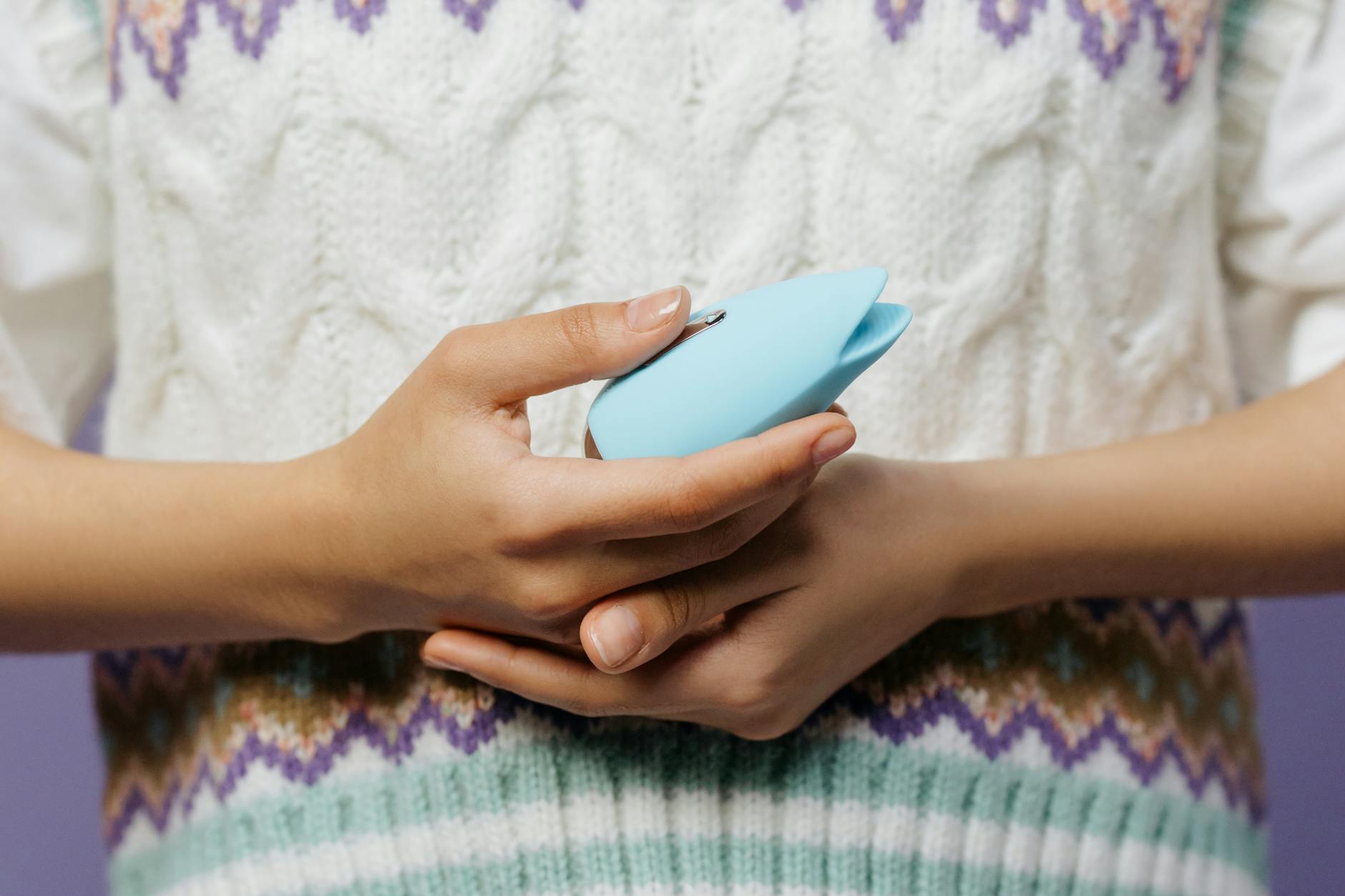
The shame narrative nobody talks about
Here's what I hear in my practice over and over: "I want to explore solo pleasure, but I feel weird about it." The weirdness isn't random. It's layered—religious upbringing, messages from family, cultural narratives that treat a woman's pleasure as something shameful or selfish. And then there's the meta-shame: feeling ashamed that you feel ashamed.
That's the part that actually matters to address first. Because you can own the best lemon vibrator on the market, set up the perfect environment, and still freeze the moment you press power.
Let me be clear: your desire to experience pleasure—solo or otherwise—is not selfish, broken, or wrong. It's human. And the resistance you're feeling isn't a sign you should stop. It's a sign you're bumping up against a belief system that was never yours to begin with.
Why the judgment hits harder than you expect
There's solo pleasure, and then there's the voice in your head while you're experiencing it. For many people, especially women, that voice sounds like someone else's disapproval—a parent, a religion, a partner, or just "society in general."
In my work as a couples and family therapist, I've learned that shame thrives in secrecy. The moment you name it and see it for what it is—a learned pattern, not a truth about you—it loses power.
Some people can compartmentalize fine. Others find that shame during solo play leaks into partnered sex, into body confidence, into how much pleasure they allow themselves to feel. If you're reading this, you probably fall into that second category.
Here's the practical part: using a lemon clitoral vibrator—the Lem or another trusted tool—becomes an act of reclamation precisely because you're doing it despite the discomfort. You're saying to yourself, "My pleasure matters more than this old script."
The actual mechanics: how to start when shame is present
First: you're not broken for having this resistance. It's not something to "overcome" or "push through" with willpower. Willpower doesn't work against shame. Curiosity does.
Start small and private. I mean truly private. Lock the door. Silence your phone. Set a time when you know you won't be interrupted. This isn't about luxury (though it can be). It's about sending your nervous system a message: "This is safe. This is for you."
Next, pick a lemon vibrator you like the look of. The Lem works beautifully here because it's elegant and because air-suction stimulation feels gentler and less clinical than some other vibrators. No one needs to know you own it. It can live in a drawer, a box under the bed, a locked bag. Your space, your rules.
Start with your clothes on. Seriously. Lie down. Hold the device. Don't turn it on yet. Notice what you're feeling. Are you anxious? Excited? Guilty? All of the above? Label it without judgment. "Okay, I'm feeling nervous." That's not a reason to stop.
The pattern that actually shifts shame
There's a reason shame persists: because we're trained to disconnect from pleasure the moment it surfaces. The pattern goes: feel aroused or curious, then immediately intercept it with guilt, then convince ourselves we don't really want it anyway.
Breaking that pattern doesn't require big feelings or a dramatic mindset shift. It requires repetition and gentle persistence.
Here's what I recommend: start with 5-10 minutes, no pressure to orgasm. Use a water-based lubricant—even though you're fully clothed, it helps you feel more connected to the sensations. Turn on the Lem at pattern 1 or 2 (the gentler settings). Place it on your outer clitoris through your clothes, or adjust as feels right.
Your job: stay present. When the shame voice shows up—and it will—acknowledge it. "There's that voice. That's the old script." Then gently bring your attention back to sensation. What does this feel like? Where in your body do you feel it? Is it pleasant?
You're not trying to feel a certain way. You're just trying to stay in your body and gather data: "Okay, so this actually feels good."
After 10 minutes, stop. Turn it off. Notice that nothing bad happened. You didn't become a different person. The world didn't end. You just experienced a bit of pleasure, and you're still you.
Repeat this 3-5 times before you expect anything to feel "normal." Your nervous system needs time to integrate the message that pleasure is safe.
Why lemon clitoral vibrators work specifically for this
A lot of people—especially those with shame patterns around pleasure—find that traditional vibrators feel too intense or clinical. The directness can actually intensify the discomfort.
Lemon vibrators like the Lem use suction or air-pulse technology instead of direct vibration. It feels less like a "sex toy" experience and more like a massage or a gentle pressure. For people rebuilding trust with their own pleasure, that distinction matters. It feels less loaded, less obvious, more like something you could almost convince yourself isn't "really" a vibrator (even though it is, and that's fine).
The other thing: why lemon vibrators feel different than other clitoral vibrators often comes down to how the stimulation builds. Air-pulse devices create a sensation that feels more natural, more like foreplay or fingertips, which feels less transgressive to people carrying shame.
Is that logical? No. But shame isn't logical. It lives in sensation and narrative, not reason. Meeting yourself where the shame is—which is sensory and embodied—works better than arguing yourself out of it.
The conversation you might need to have with a partner
If you're in a relationship, you might wonder: should I tell them? Will they feel threatened? The honest answer: it depends on your relationship and your boundaries.
What I tell couples is this: solo pleasure and partnered pleasure are different things serving different purposes. One isn't a substitute for the other. But shame often whispers, "If I do this alone, my partner will think I don't want them." That's the shame talking, not reality.
If you decide to tell your partner, the frame matters. "I'm exploring my own pleasure because I want to understand my body better" is different from "I need this because you're not doing X right." One invites curiosity. The other triggers defensiveness.
If you decide to keep it private, that's also okay. You're not lying by omission about something this intimate. You're protecting your own process until you feel ready to share it.
Whatever you choose, the key is that you're choosing. That's where your power lives.
When to reach out for support
If shame around pleasure is deeply rooted—connected to trauma, religious abuse, or relational patterns you can't seem to shift on your own—consider working with a therapist, especially one trained in somatic or sex-positive modalities. There's no shame in getting support around shame. That's actually exactly what therapy is for.
Likewise, if you're in a partnership and your partner's response to your solo exploration creates a real conflict, couples counseling can help you both get on the same page.
But if you're simply dealing with the normal internal resistance that most people navigate when reclaiming their sexuality, then what you're doing right now—starting small, being gentle with yourself, showing up repeatedly—is exactly the right approach.
Moving forward
Your pleasure is not selfish. It's not shameful. It's not something you need to apologize for or hide forever. But you also don't need to force yourself into comfort overnight.
Use your lemon vibrator as a tool for reconnection with yourself. Each time you use it, you're saying, "My body deserves attention. My pleasure matters." Repeat that enough times and something shifts. The shame doesn't vanish instantly, but it stops being the biggest voice in the room.
You deserve to feel good. Not someday, not after you've earned it or fixed something about yourself. Now. With whatever tools and timelines feel right to you.
People also ask
Is it normal to feel guilty while using a clitoral vibrator?
Completely normal, especially if you grew up with messages that women's sexuality is shameful or selfish. Guilt and pleasure often coexist because you're challenging beliefs that have been reinforced for years. The guilt doesn't mean you should stop. It means you're exactly where you're supposed to be in the process of reclamation. Keep showing up anyway.
Do I need to tell my partner I'm using a lemon vibrator for solo play?
That's your call entirely. There's no universal right answer. What matters is that it's your choice, not made from fear or shame. Some people share everything with their partners, and that works for their relationship. Others keep solo exploration private, and that works too. Ask yourself: "What do I want?" not "What should I do?"
How do I stop feeling like using a vibrator is wrong?
You can't think your way out of shame. You have to feel your way through it. That means using the vibrator even when it feels uncomfortable, noticing that nothing bad happens, and repeating. Eventually, your nervous system catches up to the truth: pleasure isn't wrong. It's just pleasure.
Can lemon clitoral vibrators really feel less intense than traditional vibrators?
Yes. Suction-based stimulation feels qualitatively different from direct vibration. It's gentler, more diffuse, and often less clinical-feeling. For people with shame around sexuality, that can make a real difference in how safe the experience feels. But intensity is personal. What matters is finding what works for your body.
What if I start using a lemon vibrator and realize I still don't feel pleasure?
Pleasure takes time to reconnect to, especially if shame has been blocking it. Give yourself at least a month of consistent, low-pressure exploration before you assume something's "wrong." If pleasure still feels unreachable and it's causing distress, that's a conversation to have with a sex therapist or sex-positive healthcare provider. Sometimes there's a physical component (medications, hormonal shifts). Sometimes there's an emotional piece that needs professional support.
Is using a vibrator alone considered cheating or infidelity?
No. Solo exploration is not infidelity. It's also not a replacement for partnered sex. It's a separate thing entirely. If your partner has expressed that they'd feel hurt by this, that's a conversation worth having with them, ideally with a couples therapist. But the default answer is: your body is yours, and exploring your own pleasure is your right.
Your pleasure matters. You don't need permission. You don't need to have overcome all your shame before you start. You just need to be willing to show up for yourself, again and again, with gentleness and curiosity. That's where the real work happens. If you're looking for more guidance on navigating pleasure in relationships, read about how to use lemon vibrators when you feel disconnected from your body or reach out to us at /contact if you'd like to chat about what you're experiencing.