Here's the brutal truth about anxiety and arousal
You can't feel turned on when your body thinks it's being chased. This isn't a character flaw or a sign your relationship is broken. It's neurobiology. When anxiety activates your sympathetic nervous system (fight-or-flight), it diverts blood flow away from your genitals and toward your large muscle groups. Your breathing quickens, your thoughts scatter, and your pelvis basically goes offline.
This is why willpower doesn't work. You can't think yourself into arousal when your amygdala is screaming danger.
The good news: lemon clitoral vibrators work differently than you might think when anxiety is in the room. They're not about forcing arousal. They're about interrupting the anxiety loop and giving your nervous system permission to shift states.
Why regular vibration fails when you're anxious
Most vibrators rely on you to already be somewhat aroused. They enhance sensation you're already feeling. But when anxiety has shut down your arousal entirely, stimulation can feel jarring, invasive, or actually more stressful. Your body tenses further. The vibration feels annoying instead of pleasurable.
Lemon clitoral vibrators, especially air-suction devices like the Lem, work on a different principle entirely. They don't vibrate directly against sensitive tissue. Instead, they create gentle rhythmic suction that stimulates nerve endings through a buffering layer of air and the device itself. For an anxious body, this matters enormously.
Why? The sensation feels contained, predictable, and less overwhelming. You're not being bombarded with intensity you didn't ask for. Instead, you're receiving consistent, gentle stimulation that your nervous system can process without triggering more alarm.
The window of tolerance and how to expand it
Your "window of tolerance" is the zone where your nervous system feels safe enough to be present. Below it: shutdown, numbness, dissociation. Above it: panic, racing thoughts, physical tension. Arousal happens inside that window.
Anxiety shrinks your window hard. When you're worried about performance, about your body, about what comes next, your tolerance band narrows to almost nothing.
The lemon clitoral vibrator's strength is that it has a low entry point. The initial sensation is gentle enough that many anxious people can stay inside their window while using it. You're not forcing your system into a state it can't handle.
Here's how to use that:
Start at the lowest setting. Don't assume you want intensity. Your nervous system might need five minutes at setting one before it's ready to move to two. There's no race.
Pair it with grounding. While using the Lem, name five things you can see, four you can feel, three you can hear, two you can smell, one you can taste. This 5-4-3-2-1 technique keeps your brain in the present moment instead of spinning into anxiety stories.
Use breath as your co-pilot. Long exhales (longer than your inhales) activate your parasympathetic nervous system. Try breathing in for four counts, out for six. Use the vibrator's rhythm as your timer if that helps.
The solo versus partnered shift when anxiety is present
If your anxiety is tied to performance or being watched, solo exploration with lemon vibrators changes the equation entirely. There's no judgment happening. There's no timing pressure. You're not managing anyone else's experience.
This is often where pleasure returns first. When you're alone with your body and a gentle, predictable tool, your nervous system finally has room to relax.
If you want to eventually integrate your partner, that's a separate conversation with a separate timeline. Many people find that reclaiming solo pleasure first actually makes partnered sex less anxiety-inducing later because you've rewired your brain's relationship with your own arousal.
What anxiety-specific blocks actually require
If your anxiety is clinical (panic disorder, generalized anxiety, trauma-related), a lemon vibrator is a helpful tool but it's not a substitute for addressing the underlying condition. A therapist trained in somatic experiencing or trauma-informed care can help your nervous system process what's underneath the arousal block.
Similarly, if anxiety about sex specifically is the issue (performance anxiety, fear of pain, shame), cognitive behavioral therapy or couples counseling has strong evidence for shifting these patterns. The vibrator becomes part of a broader plan, not the whole plan.
What many people miss: anxiety about sex and clinical anxiety often need different interventions. You might have both simultaneously, which means you might benefit from both medication support and a sex-positive therapist and a lemon clitoral vibrator working together.
Creating the conditions your nervous system actually needs
Three things matter more than the vibrator itself:
1. Safety signals. Your body needs to know it's genuinely safe. This might mean locking the door, silencing your phone, or telling your partner explicitly, "I need one hour alone." Not sexy, but it's the foundation.
2. Time. Anxiety speeds everything up. Give yourself permission for thirty to forty-five minutes with no goal except noticing what your body does. The orgasm is not the point. Staying present is.
3. Curiosity instead of performance. Swap "I should be able to get aroused" for "I wonder what my body is capable of right now." This tiny mindset shift turns the whole thing from a test you might fail into an experiment.

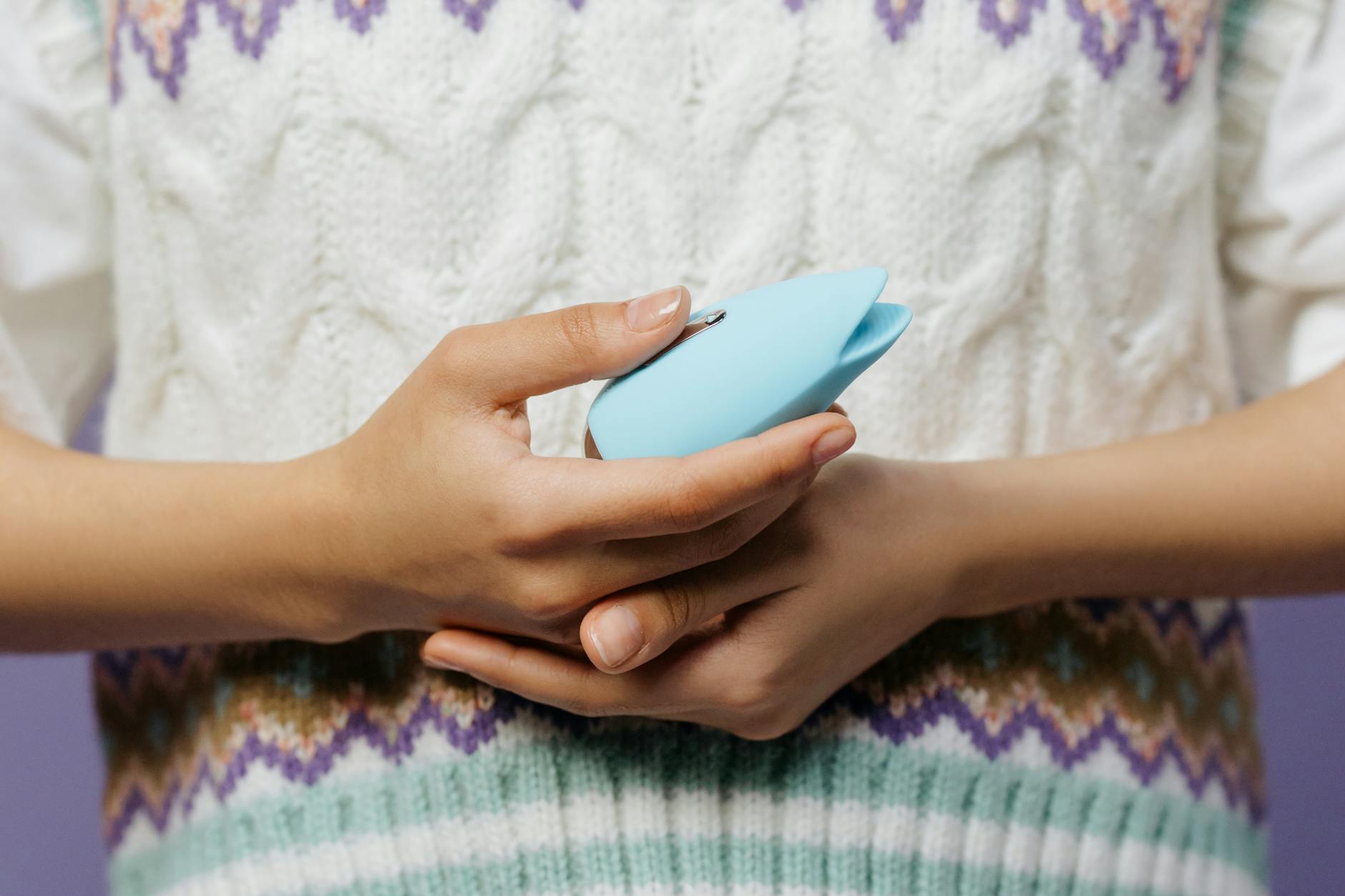
Photo by Ihsan Adityawarman on Pexels
Why the Lem specifically helps anxious bodies
The lemon clitoral vibrator's air-suction technology creates sensation that's qualitatively different from traditional vibrators. It's rhythmic rather than buzzy. It's contained rather than spread across a wider surface area. And because it uses suction, you control how much pressure by adjusting how firmly you hold it against your body.
For someone whose nervous system is already in overdrive, this control is everything. You're not at the mercy of a motor. You're the one deciding intensity, duration, everything.
Start with the gentlest setting. Let your body adjust. Move to the next level only when you feel genuinely ready, not when you think you "should" be able to handle more.
When to bring a partner back into this
If your anxiety is partnered anxiety, at some point you'll want to involve them again. That timing is personal. Some people benefit from a conversation first: "My nervous system is learning to feel safe with pleasure again. I need you to know this isn't about you." Others prefer to wait until they've had solo success before attempting partnered exploration.
When you do involve a partner, consider building this into your routine together. Your partner might hold you while you use the lemon clitoral vibrator. They might provide grounding (the 5-4-3-2-1 game works great with a partner narrating). They might just be present without touching, their calm presence helping regulate your nervous system.
If your partner is skeptical about vibrators, there's a separate conversation worth having about why that matters and what you actually need from them during this process.
The timeline is not linear
Some days your nervous system will be more available for pleasure than others. Stress, hormones, sleep, and what happened earlier in the day all shift your window of tolerance. A lemon vibrator that feels amazing on Tuesday might feel neutral on Wednesday. That's not failure. That's just how nervous systems work.
Keep using it anyway. You're not chasing an orgasm. You're gradually teaching your body that pleasure is possible even with anxiety present. Each session is gathering evidence that your nervous system can hold both: awareness of anxiety and the capacity for sensation.
FAQ: Anxiety and arousal with lemon clitoral vibrators
Can a lemon vibrator actually help if I have panic disorder?
A lemon vibrator is a tool for creating positive sensation, but it's not a treatment for panic disorder itself. If you have panic disorder, working with a therapist on your nervous system regulation is foundational. The vibrator can then support that work by giving you a gentle way to practice staying present in your body. Think of it as part of a bigger picture, not the whole solution.
Why does my anxiety come back even when something feels good?
This is completely normal. Your nervous system learned to be protective of you. Even when something pleasurable starts happening, old alarm bells can trigger. It's not that the pleasure is doing anything wrong. It's that you're rewiring an old pattern, and rewiring takes repetition. Each time you stay calm through the beginning of pleasure, your brain learns a little more that it's safe.
Should I use lemon vibrators while I'm taking anxiety medication?
Generally yes. Most anxiety medications don't interfere with sexual pleasure, though some do affect arousal or sensation. If you're on medication that affects sexual function, your prescriber should know. Many medications are easily adjustable, and there might be alternatives that work better for your body. Don't assume the medication is the permanent problem without asking.
What's the difference between anxiety about sex and just being anxious in general?
Anxiety about sex is usually specific: performance worry, fear of judgment, concern about pain, or shame about your body. General anxiety affects everything, including sex. Many people have both. If your anxiety shows up across all areas of life, that's worth addressing with a therapist. If it's mostly about sex, a sex-positive therapist or couples counselor is often the right fit. Sometimes it's both.
How do I know if I should use a lemon vibrator solo or with a partner?
Start solo. This gives your nervous system the safety to explore without managing anyone else's experience or expectations. Once you've rebuilt your confidence in your own arousal, partnered exploration becomes less loaded. If your anxiety is specifically partnered anxiety, solo success often reduces the pressure when you eventually explore together.
Is it normal to feel nothing even with a lemon clitoral vibrator at first?
Yes. Numbness is actually a common anxiety response. Your body might shut down sensation as a protection mechanism. If you're feeling nothing at all, that's not a reason to push harder. It's a reason to back up, ground yourself with the 5-4-3-2-1 technique, and try again when your nervous system is less activated. Sometimes permission to feel nothing is what finally allows something to shift.
What comes after you start reclaiming your arousal
The goal isn't to become someone who never feels anxious about sex. It's to expand your window of tolerance so that you can feel anxious and still access pleasure. You can notice the worry and stay present anyway. That's the shift that changes everything.
A lemon clitoral vibrator is just the tool. The real work is teaching your nervous system that your body is safe, that pleasure is possible for you, and that you deserve that experience. Once your body believes that, arousal becomes possible again. Not guaranteed every time, but genuinely possible.
If you're struggling with this on your own, reach out. Your doctor, a therapist, or a couples counselor can help you build a plan that addresses both the anxiety and the arousal. You don't have to fix this alone.